Gambling licences compared from the UK to Curaçao and Anjouan
What each major gambling regulator actually does for players, which licences crypto casinos really hold, and why the rules where you live matter more than the badge.

What a licence is, in plain words
A gambling licence is permission. A government body, called a regulator, looks at a company and says it may run gambling under that body’s rules. The regulator can then check on the company, fine it, or take the licence away.
That’s all a licence is. It isn’t a promise that you’ll be paid, that you’ll win, or that the site is legal where you live. It also isn’t the same everywhere. A UK licence and an Anjouan licence are both called “licences”, but they’re about as alike as a passport and a library card.
So the useful question is never “is it licensed?” It’s “licensed by whom, and what will that regulator actually do for me if something goes wrong?” This guide answers that for every regulator you’re likely to meet, and links to each one’s own website so you can check what we say. To check that a casino’s licence is real in the first place, use our step-by-step guide on how to check a casino licence. We won’t repeat those steps here.
A few words we’ll use a lot. A dispute service, or ADR (alternative dispute resolution), is an independent referee who looks at your complaint when the casino’s own complaints process fails. Segregated funds means the casino keeps players’ money in a separate account from its own, so it can’t spend your balance on bills. Self-exclusion means you ask to be blocked from gambling for a set time. KYC (know your customer) is the identity check, where the casino asks for your ID and sometimes proof of address or where your money came from.
Where you live matters more than the casino’s licence
This is the part most people miss. Every country decides for itself what gambling is allowed. If you live in the UK, Sweden, Germany or Ontario, your own government runs a licensing system, and only sites licensed there are legal for you. A casino licensed in Curaçao or Anjouan isn’t licensed for your country, however nice the badge looks.
Other countries ban online casinos outright, like Australia and, for casino games, France. And many countries have no clear rules at all, which is where offshore licences live.
Playing on a site that isn’t licensed where you live usually isn’t something players get prosecuted for. But it does mean your own country’s protections don’t apply. No local referee, no local self-exclusion scheme, no local regulator to complain to. Read is crypto gambling legal where you live before you sign up anywhere. And don’t use a VPN to get around a block. It almost always breaks the casino’s terms, and it’s an easy excuse for them to keep your winnings.
What happens when you complain
The biggest difference between licences shows up on the day something goes wrong. Here’s the path a complaint takes, side by side.
Keep that picture in mind as you read on. The rest of this guide is mostly about which column a licence puts you in.
The strong regulators
UK Gambling Commission
The UK Gambling Commission (UKGC) is the strictest regulator most people will ever deal with. It was set up under the Gambling Act 2005, which is still the main law for gambling in Great Britain. Its licensees must check your age and identity before you can gamble. They must belong to GAMSTOP, the free national self-exclusion scheme, which has been a licence requirement for online operators since 31 March 2020. One sign-up blocks you from every site licensed in Great Britain.
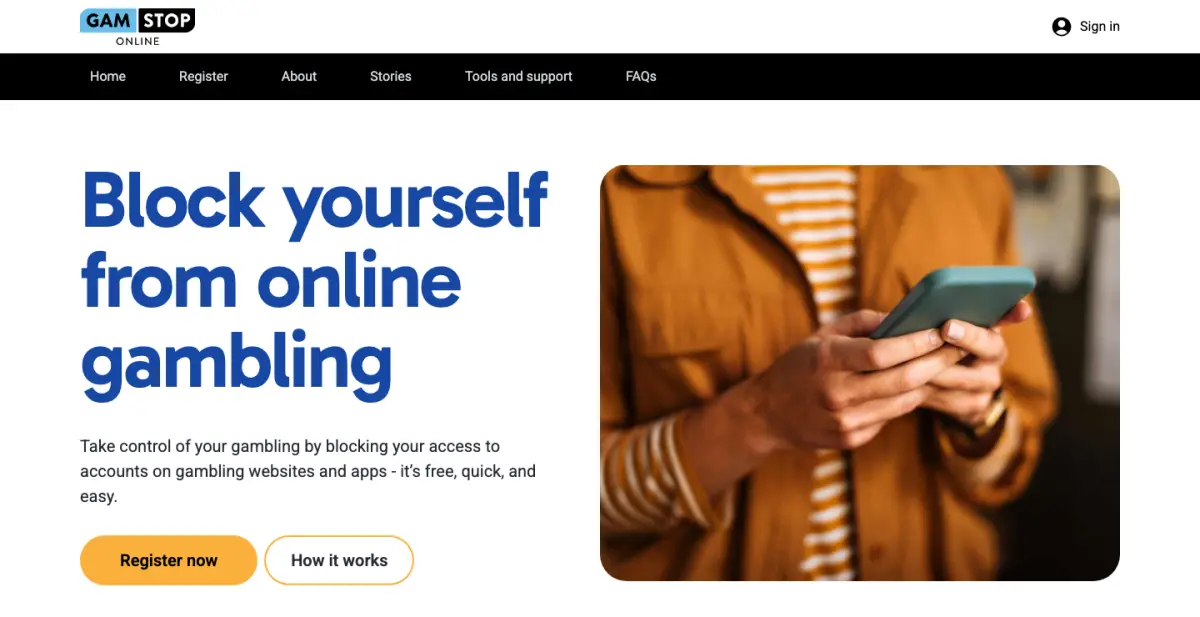
Lots of people use it. GAMSTOP says 433,357 people signed up between its launch in April 2018 and the end of 2023. In its July 2026 update it said 614,738 people were currently excluded through the scheme, and that May 2026 was its busiest month yet, with 12,236 new sign-ups.
Your money gets attention too. Every remote operator must at least keep customer funds in separate accounts, and it must tell you in its terms and at the point of deposit how well those funds are protected if the company goes bust. The labels run from “not protected” to “medium” and “high”. Read that line. It’s honest in a way most casino marketing isn’t.
If a complaint isn’t sorted within eight weeks, the casino must let you take it to a free independent ADR provider. The Commission explains how that works on its page about how to complain about a gambling business. Its public register lets you search by company name or by domain.
And it does fine people. William Hill agreed to pay a record £19.2 million in 2023 for failures in protecting customers and stopping money laundering. As of November 2026 that’s still the biggest, and the Commission lists every case on its enforcement page.
Crypto is not banned in the UK, but in practice you won’t find it. The Commission expects full details of any crypto use and has been looking at a possible regulated route in 2026. For now, UK sites are built around cards and bank payments.
Malta Gaming Authority
The Malta Gaming Authority (MGA) licenses many of the big international brands. Player money must be kept apart from the company’s money, and Maltese law gives the MGA power to take control of player funds if an operator goes bust. Licensees must give you a complaints procedure and then a route to an independent ADR body. The MGA also has a Player Support Unit that accepts complaints, though it doesn’t rule on individual disputes.
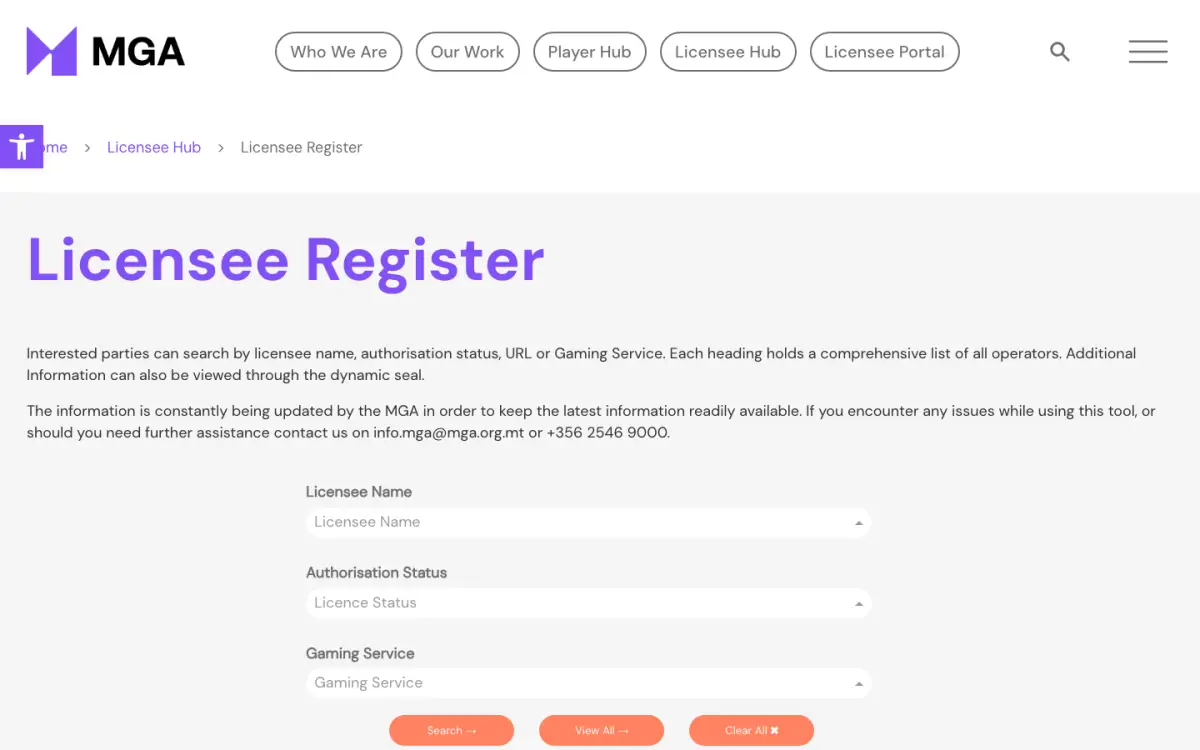
You can look up any Maltese licence on the MGA’s licensee register, by company name, licence status or website address. KYC is strict, in line with EU money-laundering rules. Crypto is possible but tightly controlled. Licensees need the MGA’s prior approval to accept it, and privacy coins are not allowed. Malta has no national self-exclusion list for online play, so you self-exclude site by site. The MGA’s self-exclusion page explains how that works.
Isle of Man
The Isle of Man Gambling Supervision Commission is small but serious. It says its licensees must have a system that fully protects player funds, backed by bank guarantees or trust arrangements. Its online licensee register shows each licence’s status, dates and website domains, which makes checking easy.
The Isle of Man is also one of the few strong regulators that openly allows crypto casinos. Players can deposit and withdraw in crypto, with extra money-laundering and source-of-funds checks. If you want crypto and real protection together, an Isle of Man licence is about as good as it gets. Very few crypto-first casinos hold one.
Gibraltar and Alderney
Gibraltar is home to some of the biggest betting firms in the world and has been rewriting its gambling law to replace the old 2005 Act. Its Gambling Division publishes a list of licence holders. Alderney, a small Channel Island, has licensed online gambling for a long time and runs its own player complaint process. It received 142 complaints in 2024 and said all were resolved without needing a formal hearing. Both are well respected. You’ll rarely see either on a crypto casino.
Country licences in Europe
Several European countries license gambling only for their own residents. If you live there, this is the licence that counts. Licensed sites in these countries are built around bank cards and local payment methods, and crypto is rare to non-existent.
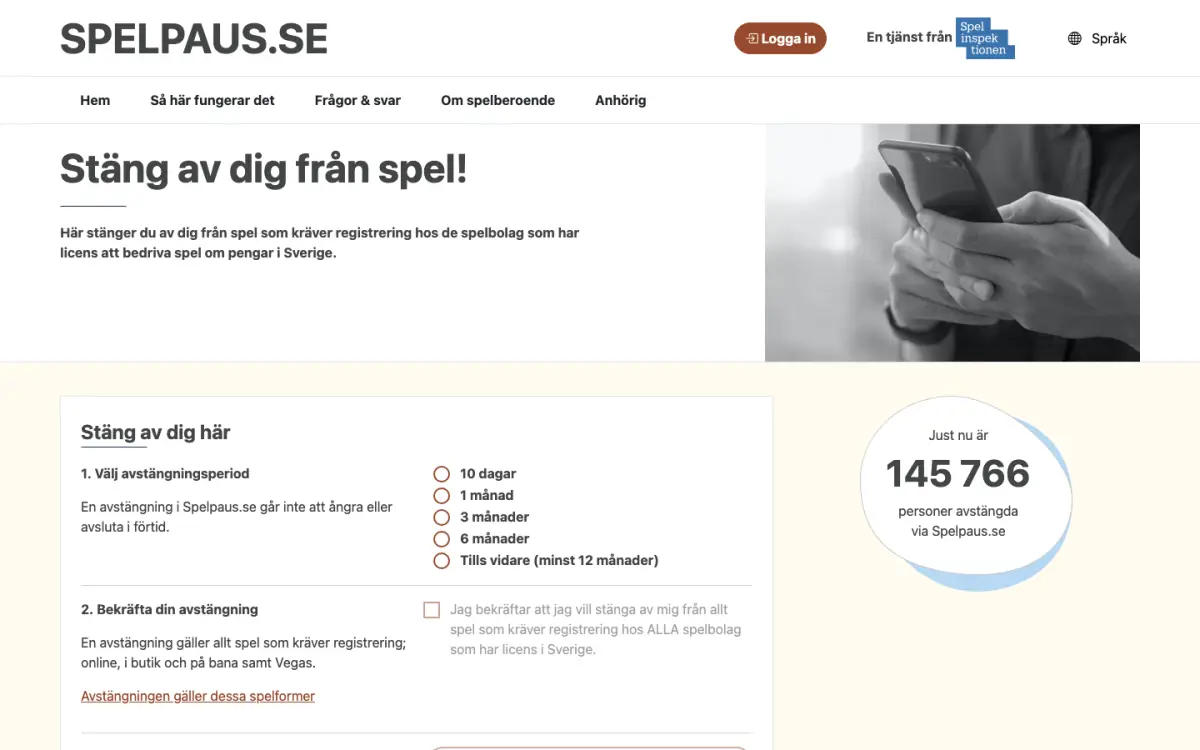
Sweden’s regulator, Spelinspektionen, has licensed online gambling since 1 January 2019 and keeps a public licence register. Its self-exclusion scheme is Spelpaus, which blocks you from every licensed site at once. When we looked on 5 November 2026, its homepage said 145,766 people were currently excluded through it. Disputes can go to ARN, the national consumer disputes board.
Denmark’s regulator, Spillemyndigheden, publishes a list of licensed operators and runs ROFUS. Licensed sites must check it every time you log in.
Germany created a joint regulator for all its states, the GGL, under a treaty from 2021. It publishes a whitelist of licensed sites, and every licensed site must use OASIS, the national block list run by the regional council in Darmstadt. Germany also has some of the tightest online slot rules anywhere. The long-standing defaults were a €1 maximum bet per spin, at least five seconds per spin and a €1,000 monthly deposit limit across all sites. The GGL was reviewing these rules during 2026, so check the current limits if they matter to you.

The Netherlands opened its licensed market on 1 October 2021, regulated by the Kansspelautoriteit (Ksa), which keeps a register of licence holders. Every licensed site must check CRUKS, the Dutch self-exclusion register. Spain’s DGOJ runs a register of licensed operators and a self-exclusion list called RGIAJ. Spanish licensed sites must check it when you open an account. Italy’s regulator, ADM, relaunched its online market with new nine-year concessions that started on 13 November 2025. Each one cost €7 million, which tells you how serious the entry bar is. ADM publishes lists of licensed sites and also of sites it blocks.
France is the odd one out. Its regulator, the ANJ, licenses online sports betting, horse-race betting and poker, and lists every approved operator. Online casino games like slots and roulette are not licensed at all, so no online casino is legal for players in France.
North America and Australia
In Canada, Ontario is the province with an open licensed market. It launched in April 2022. The AGCO sets the rules and keeps a list of registered operators, and iGaming Ontario runs the market with licensed operators. Ontario’s standards don’t allow crypto deposits. A central self-exclusion scheme for all licensed sites, called BetGuard, arrived in May 2026.
In the United States, online casinos are a state matter. As of November 2026, eight states have legalised them. They are New Jersey, Pennsylvania, Michigan, West Virginia, Delaware, Connecticut, Rhode Island and Maine, though Maine had not launched yet. Each state has its own regulator, like the New Jersey Division of Gaming Enforcement, its own licence list and its own self-exclusion list. In New Jersey that means the list of internet gaming permit holders and the DGE self-exclusion program. Regulated US sites work in dollars, not crypto.
Australia is simple and strict. Under the Interactive Gambling Act 2001, it’s illegal to offer online casino games to people in Australia. The media regulator, ACMA, asks internet providers to block illegal gambling sites and names them in regular updates, like its July 2026 blocking update. By March 2026 it had blocked 1,564 gambling and affiliate websites since its first request in November 2019, and it has kept adding more. By mid-July 2026 the count had reached 1,774.
For legal online betting, Australia runs BetStop, a national self-exclusion register.
Why Curaçao is everywhere
For years, Curaçao was the default licence for crypto casinos. The old system ran through a handful of private master licence holders. They handed out sublicences, which were licences under their own licence, to hundreds of casinos with very little checking. It was cheap and quick, and when things went wrong players had almost nowhere to go.
That changed with the National Ordinance on Games of Chance, known as the LOK. It came into force on 24 December 2024 and ended the master licence and sublicence system. Now only the Curaçao Gaming Authority (CGA) can issue licences, directly to each operator. Existing operators got provisional licences while the CGA reviewed them, and many of those reviews were still running in 2026.
The new rules ask more. Operators need a named compliance officer, stronger KYC and anti-money-laundering checks, a responsible gaming policy and a proper complaints process, set out in the CGA’s player complaints policy. If the casino doesn’t solve your complaint, it must pass it to an independent ADR provider certified by the CGA, at no cost to you. The rules for those providers are in its ADR policy. The CGA invited ADR providers to apply in September 2025, so this part is still new and uneven.
A year into the new law, the CGA had granted 604 provisional licences and turned down 139 applications.
So is a Curaçao licence good now? It’s a real step up, and a casino that went through the CGA’s review has at least been looked at. But the CGA doesn’t step into individual disputes, there’s no national self-exclusion scheme, and enforcement is young. We’d call it moderate protection, still bedding in. Always check the licence on the CGA’s own licence register, not a former master licence holder’s website.
Anjouan and Mohéli
As Curaçao tightened up, many crypto casinos moved to Anjouan. Anjouan is one of three islands that make up the Comoros, a country off the east coast of Africa. Its licences are fast and cheap, and trade reports say close to 1,500 companies appear on its register. The Anjouan Gaming website runs its own licence register, which listed 1,287 licences when we looked on 5 November 2026.
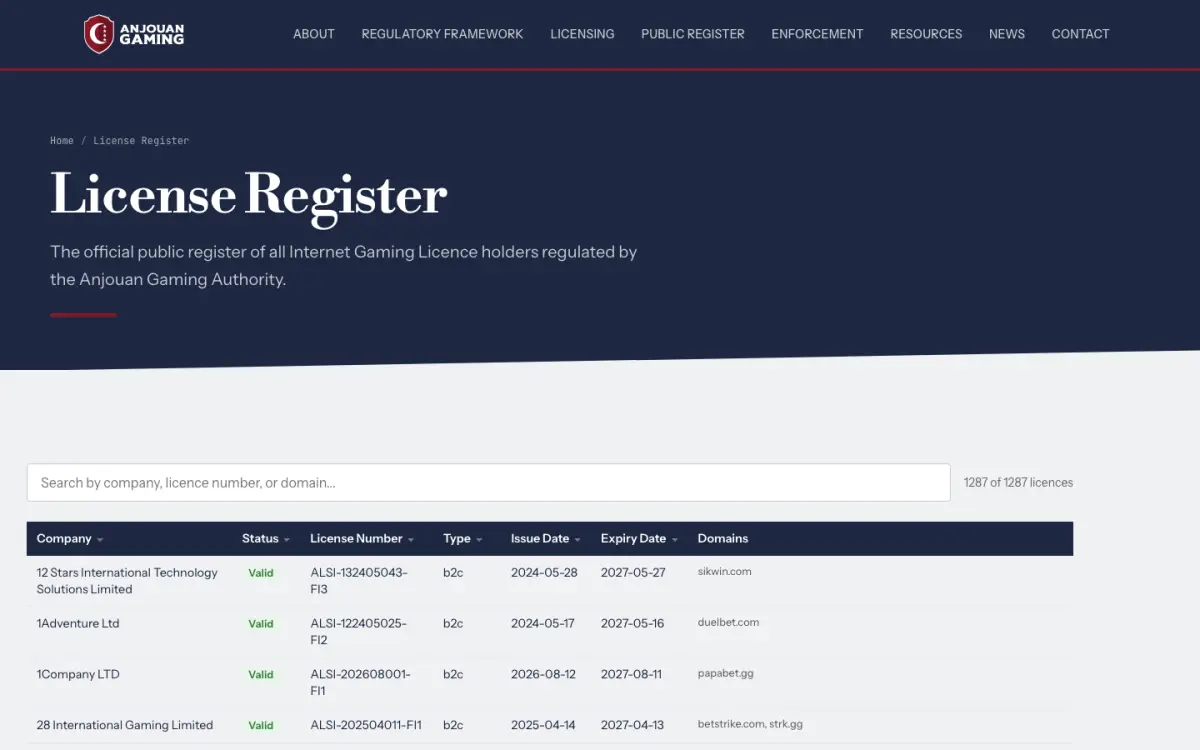
What it means for you is simple. An Anjouan licence gives you no meaningful dispute service, no national self-exclusion and no realistic way to force a payout. It mostly tells you which company runs the site.
Mohéli, another Comoros island, has its own offshore licences through a body called the Mwali International Services Authority. We treat Mohéli licences the same way as Anjouan.
Kahnawà:ke, Tobique, Costa Rica and Panama
The Kahnawà:ke Gaming Commission is based in the Mohawk Territory of Kahnawà:ke, near Montreal in Canada. Its online gaming regulations date from July 1999, which makes it one of the oldest online regulators around. It publishes its permit holders with their website addresses and has a complaint form for players who get nowhere with the operator. It’s a real regulator with a long history, but it’s a lighter touch than Malta or the UK and isn’t a licence for any country’s players.
Tobique is newer. The Tobique First Nation in New Brunswick, Canada, set up its own gaming commission in 2023 and has been licensing online casinos since 2024, including some crypto ones. There’s little independent information yet on how it handles complaints, so we treat it as an unproven offshore licence.
Costa Rica doesn’t issue gambling licences at all. Casinos that mention Costa Rica usually have a company registered there, sometimes with a data processing licence. That’s a business registration, not permission to run gambling, and nobody there will hear your complaint. Panama has a gaming board that can license online gambling, but it rarely turns up on crypto casinos.
No licence, or a fake one
Some casinos don’t claim any licence. Others show a badge that leads nowhere, or borrow a real company’s licence number. A licence badge is just a picture, so it proves nothing on its own.
A casino with no real licence has no regulator above it. Nobody can fine it, nobody checks its games and nobody hears your complaint. It isn’t automatically a scam, but if it refuses to pay you, your only tools are public pressure and patience. Our guide on what to do if a casino won’t pay walks through those options.
The big comparison
Here’s how the regulators line up on the things that matter when something goes wrong. “Dispute help” means what you can do after the casino’s own complaints process fails. Rules change, so treat this as a snapshot as of November 2026.
| Regulator | Dispute help | Player funds protected | Self-exclusion | Crypto allowed | Public register | Common on crypto casinos |
|---|---|---|---|---|---|---|
| UK Gambling Commission | Free independent ADR after 8 weeks | Separate accounts at minimum and the level must be disclosed | GAMSTOP covers every licensed site | Not banned but very rare | Yes, searchable by name or domain | No |
| Malta Gaming Authority | Independent ADR, plus a Player Support Unit | Yes, kept apart by law | Site by site | Only with MGA approval | Yes | Rarely |
| Isle of Man | Regulator complaints process | Yes, fully protected | Site by site | Yes, with extra checks | Yes, with domains | Rarely |
| Curaçao Gaming Authority | Free ADR provider certified by the CGA, still new | Weaker and not clearly published | Site by site | Yes | Yes, downloadable lists | Yes, very |
| Kahnawà:ke | Complaint form to the Commission | Not clearly published | Site by site | Varies | Yes, permit list with websites | Sometimes |
| Tobique | Unclear | Unclear | Unclear | Yes | Claimed | Sometimes |
| Anjouan | None in practice | No real checks | None | Yes | Yes | Yes, very |
| Costa Rica | None, not a gambling licence | No | None | Not regulated | No gambling register | Sometimes |
| No licence | None | No | None | Not regulated | No | Sometimes |
“Site by site” means the casino must let you exclude yourself from it, but there’s no shared list that blocks you everywhere at once.
If you live here, this is the licence that counts
If your country has its own system, a site is only legal for you if it holds that country’s licence. Here’s who to look for and which self-exclusion scheme covers you.
| If you live in | Look for a licence from | National self-exclusion |
|---|---|---|
| Great Britain | UK Gambling Commission | GAMSTOP |
| Sweden | Spelinspektionen | Spelpaus |
| Denmark | Spillemyndigheden | ROFUS |
| Germany | GGL, listed on its whitelist | OASIS |
| Netherlands | Kansspelautoriteit | CRUKS |
| Spain | DGOJ | RGIAJ |
| Italy | ADM | ADM's national self-exclusion register |
| France | ANJ, but no online casino games are licensed | ANJ's national exclusion list |
| Ontario | AGCO, through iGaming Ontario | Ontario's central scheme, BetGuard |
| New Jersey, Pennsylvania, Michigan and other legal US states | That state's own regulator | That state's own list |
| Australia | None, online casinos are illegal to offer | BetStop, for licensed betting |
If your country isn’t in this list, it may have no clear online casino rules, or it may ban them. Check the rules for your country on our legal guide.
What this means for the casinos on this site
We’ll be straight with you. Almost every crypto casino holds an offshore licence, and the ones we review are no different. When we wrote this guide, six of the eight casinos we’d reviewed held Anjouan licences, one held a Curaçao CGA licence, and one showed only a Costa Rica company registration, which isn’t a gambling licence at all.
That means that if one of these casinos refuses to pay you, there’s no UK-style referee waiting. Curaçao gives you a dispute route that’s still finding its feet. Anjouan and Costa Rica give you close to nothing. Your real protection comes from the casino’s own track record, from keeping balances small and from withdrawing often.
That’s why we check each licence on the regulator’s register ourselves and say plainly in every review what we found. We don’t let a badge do the work. Each casino review lists the licence we found and whether we could confirm it. If we can’t find a licence on the register, the casino’s safety score is capped and it can be marked “Avoid”.
How to choose
Start with where you live. If your country licenses online casinos, a site with that local licence gives you the most protection by far. That means a real referee, a self-exclusion scheme that covers every site and a regulator that answers to your government.
If you still choose a crypto casino with an offshore licence, go in with your eyes open. Check the licence on the regulator’s own site. Prefer a reviewed Curaçao licence over Anjouan, and either over nothing. Read the withdrawal terms before you deposit, start small and test a withdrawal early. Don’t leave winnings sitting on the site.
And if gambling stops being fun, every scheme in this guide exists to help. Our responsible gambling page lists free tools and support lines, including the ones that work on crypto sites with no national block list.
Official places to check for yourself
Don’t take our word for any of this. Here are the regulators’ own websites, the place where each one lists its licences, and the self-exclusion scheme that goes with it. If a casino claims a licence, it should turn up in the register in the third column.
We checked these links on 5 November 2026. Regulators move pages around now and then, so if one stops working, start from the regulator’s homepage.
Questions people ask
Which gambling licence protects players the most?
The UK Gambling Commission is the strictest for players. UK licensees must check your identity before you play, join the GAMSTOP self-exclusion scheme, keep your money in separate accounts and send unresolved complaints to a free independent referee. Malta and the Isle of Man are also strong. Very few crypto casinos hold any of these.
Is a Curaçao licence safe?
It is better than it used to be. Since the new law took effect on 24 December 2024, only the Curaçao Gaming Authority can issue licences, and operators must offer an independent dispute service. It is still a lighter touch than the UK or Malta, and many licences were still provisional in 2026.
Is an Anjouan licence real?
Anjouan does publish a register, and the badges on many crypto casinos match it. But a listing only tells you which company runs the site. Anjouan offers no real dispute service, so treat its licence as very weak protection.
Does a licence make a casino legal in my country?
No. A licence covers the place that issued it. If your country runs its own licensing, like the UK, Sweden, Germany, the Netherlands or Ontario, only that local licence makes a site legal for you. An offshore licence does not change that.
Do any strong regulators allow crypto?
A few allow it on paper. The Isle of Man permits crypto casinos with extra money checks, and Malta lets licensees accept crypto only with its approval. The UK has not banned crypto, but its licensed sites very rarely take it. Most crypto casinos hold offshore licences instead.
What is ADR in gambling?
ADR stands for alternative dispute resolution. It is an independent referee who looks at your complaint when the casino's own complaints process has failed. In the UK and Malta it is free for players and required by the regulator. Many offshore licences offer nothing like it.
Can I get help from a regulator if an offshore casino won't pay?
Sometimes, but don't count on it. Curaçao now requires an independent dispute service and Kahnawà:ke has a complaint form. Anjouan and Costa Rica offer little or nothing. The safest habit is to withdraw often and never leave big balances on any casino.